
Barnstable: Connecting Onshore
Submarine Cables
Safe, Common, Proven Technology
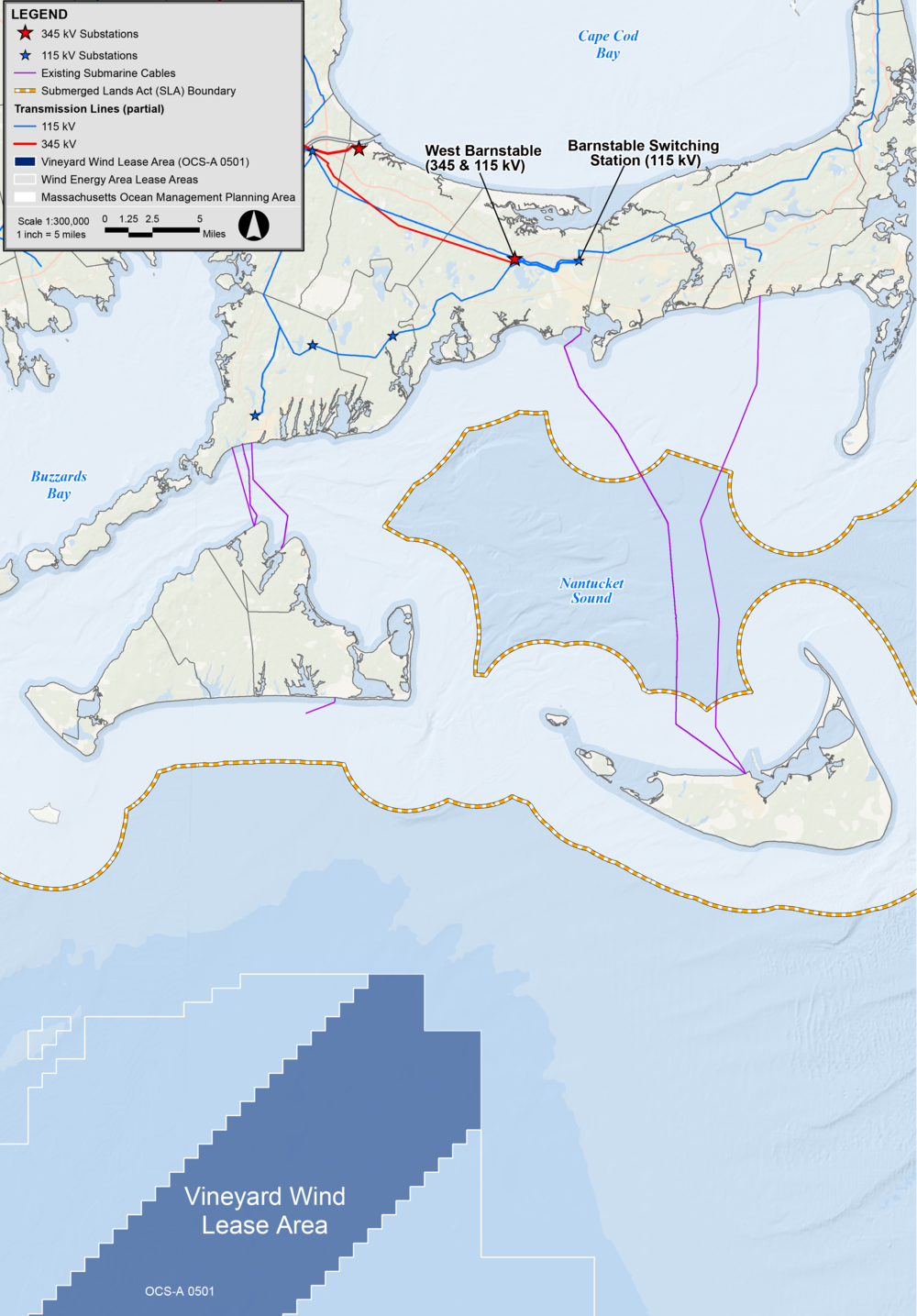
Burying cables is a standard and safe method to protect cables and reduces risk of exposure, damage, fishing gear hangs, and dramatically reduces magnetic field strength. It is much preferred over the older and more disruptive methods of cable laying.
There are currently six submarine cables beneath Nantucket Sound – two connecting power to Nantucket and four to Martha’s Vineyard including one installed most recently in 2015. Two cables, one at Kalmus Beach in Hyannis and one in Harwich, were installed using the same method (Horizontal Directional Drilling) planned for Vineyard Wind cables. While not all submarine cables are buried, it is the safest option.
Two pairs of submarine cables will connect 1600 megawatts of renewable offshore wind energy to land. The cables will be buried within a 35 mile corridor from the turbines to shore. Multiple cables are necessary to transmit the power and ensure reliability.
Each cable is 220 kilovolts AC and will be buried up to 6 feet below the stable seabed using a hydroplow. A hydroplow vehicle travels slowly along the seafloor on two tracks and uses pressurized water jets to temporarily soften the seabed into which the cable sinks and the trench backfills. The physics are similar to standing barefoot on a beach with your feet sinking into the sand as the waves wash over them. The hydroplow ensures a very narrow disruption of the seabed (six-foot corridor) as well as quick seafloor restoration due to the trench backfilling immediately.
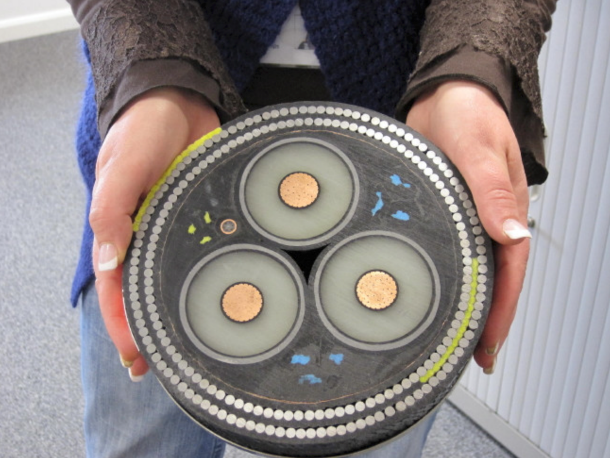
Submarine Cable
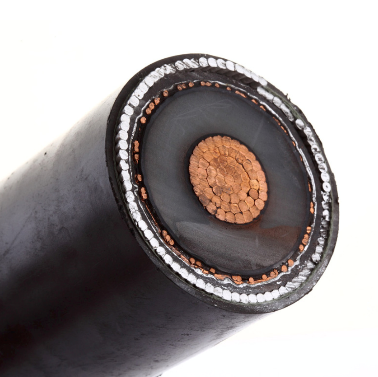
Onshore cable
Cable Landfall
Minimizing Impacts, Protecting Beaches and Natural Resources
The offshore cables connect onshore via underground conduit tunneled beneath the beach using a process called Horizontal Directional Drilling (HDD). This process ensures the cables are safely buried deep beneath the shore.
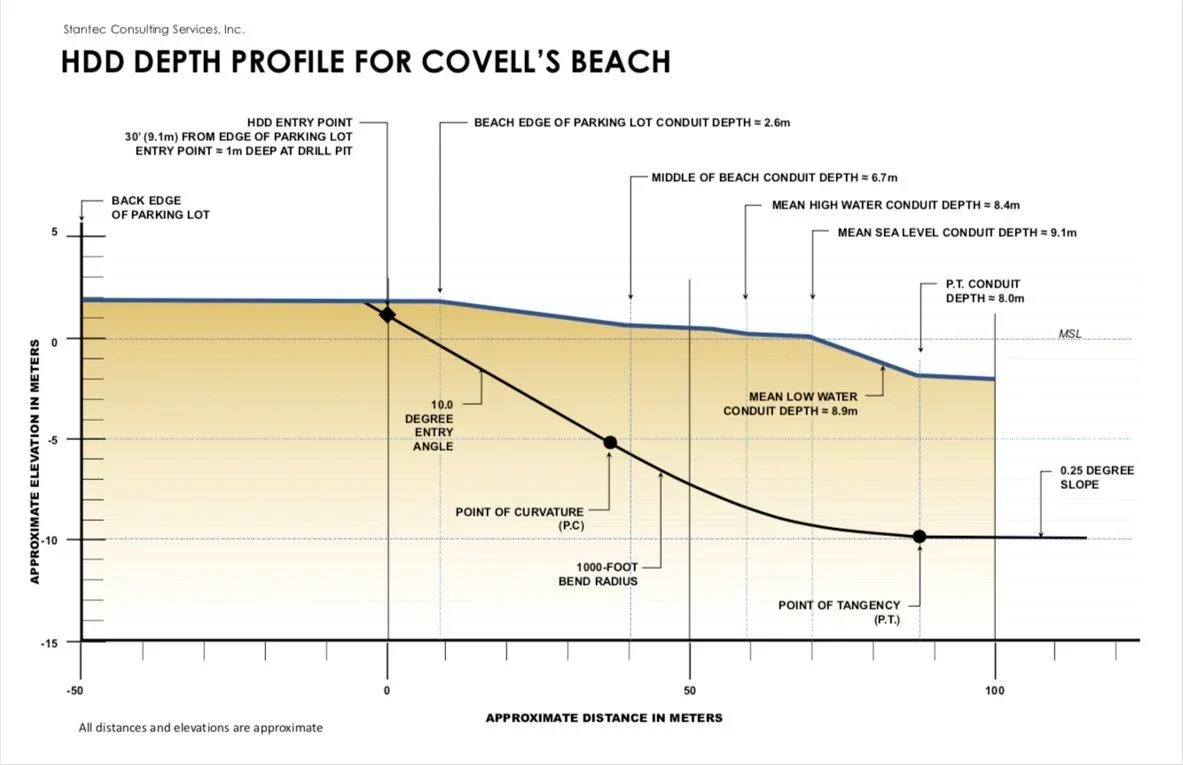
HDD is a well-established technology used to bury cables throughout the world. In fact, the Cape currently hosts six (6) buried cables that supply power to Nantucket and Martha’s Vineyard. One of these is located at Kalmus Beach in Hyannis and was installed in 2005 using HDD to power Nantucket.
The HDD process starts from the beach parking lot, drills a small tunnel in a deep arc beneath the beach and installs a steel tube conduit deep below the beach with no surface disruption. This process results in the safe, protected cable installation up to 30 feet below the beach.
All work at the beach parking lot and in Barnstable roads will be done in the off-season, per agreements with the town.
Environmental impacts have been extensively studied by multiple local, state and federal agencies. Vineyard Wind must secure over 30 permits from various agencies before work can commence.
Because cables are buried there is no electric field. However, all electricity creates a Magnetic Field (MF) and the modeled studies demonstrate that the MF created by these types of cables are comparable to that emitted by everyday household appliances and a fraction of the naturally occurring MF within the earth.
Onshore Cables
Connecting to New England’s Electric Grid
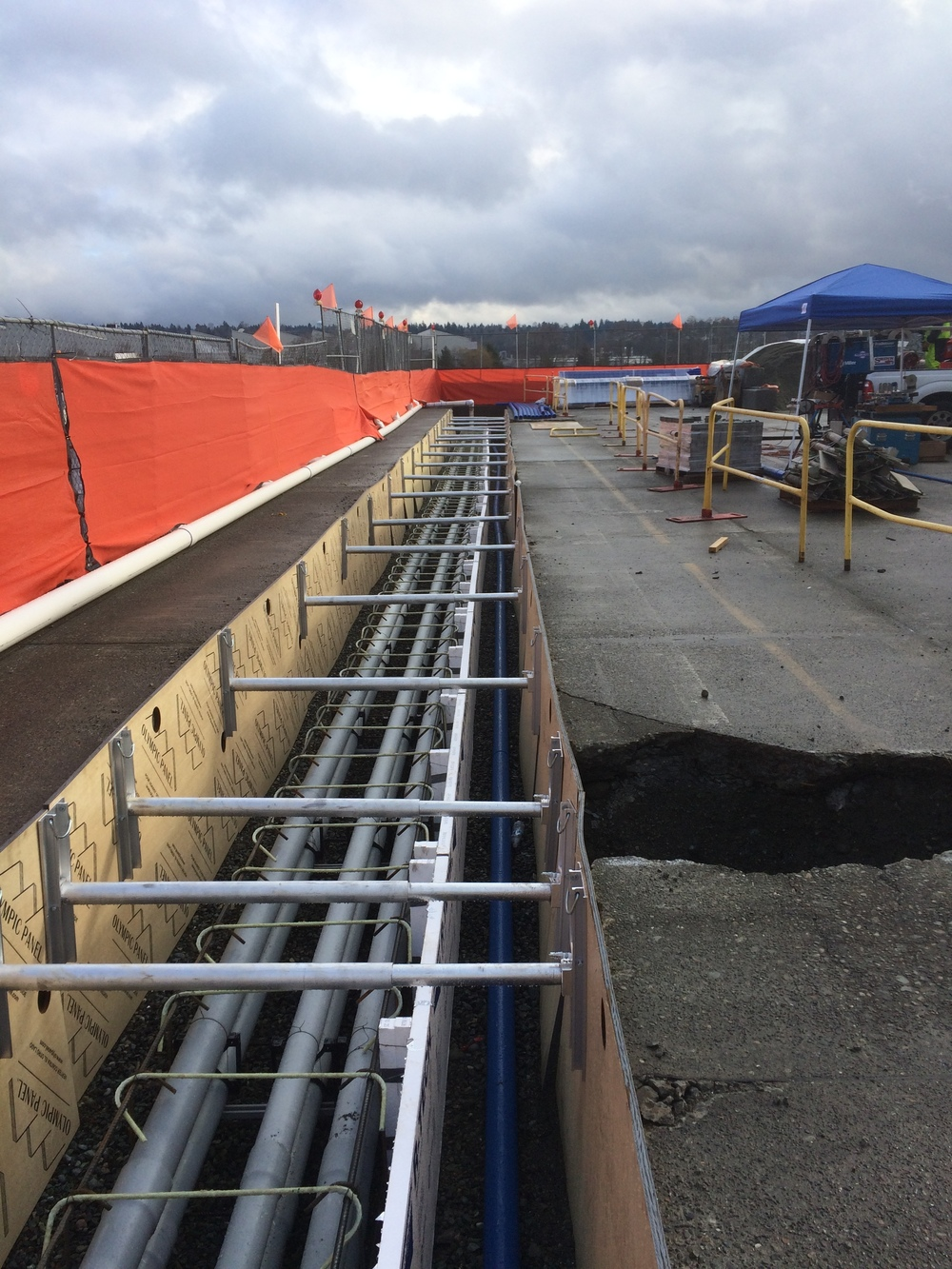
An example of in-road construction.
From the beach parking lot, cables will be buried beneath town roads and encased in concrete. This portion of our project is comparable to installation of other utilities beneath public roadways. There are hundreds of miles of cable beneath public roadways in dozens of towns in Massachusetts and existing submarine cable connection sites on Cape Cod in Falmouth, Harwich, and Barnstable.
The project will connect to New England’s electric grid via a substation adjacent to an existing substation in Independence Park in Hyannis.